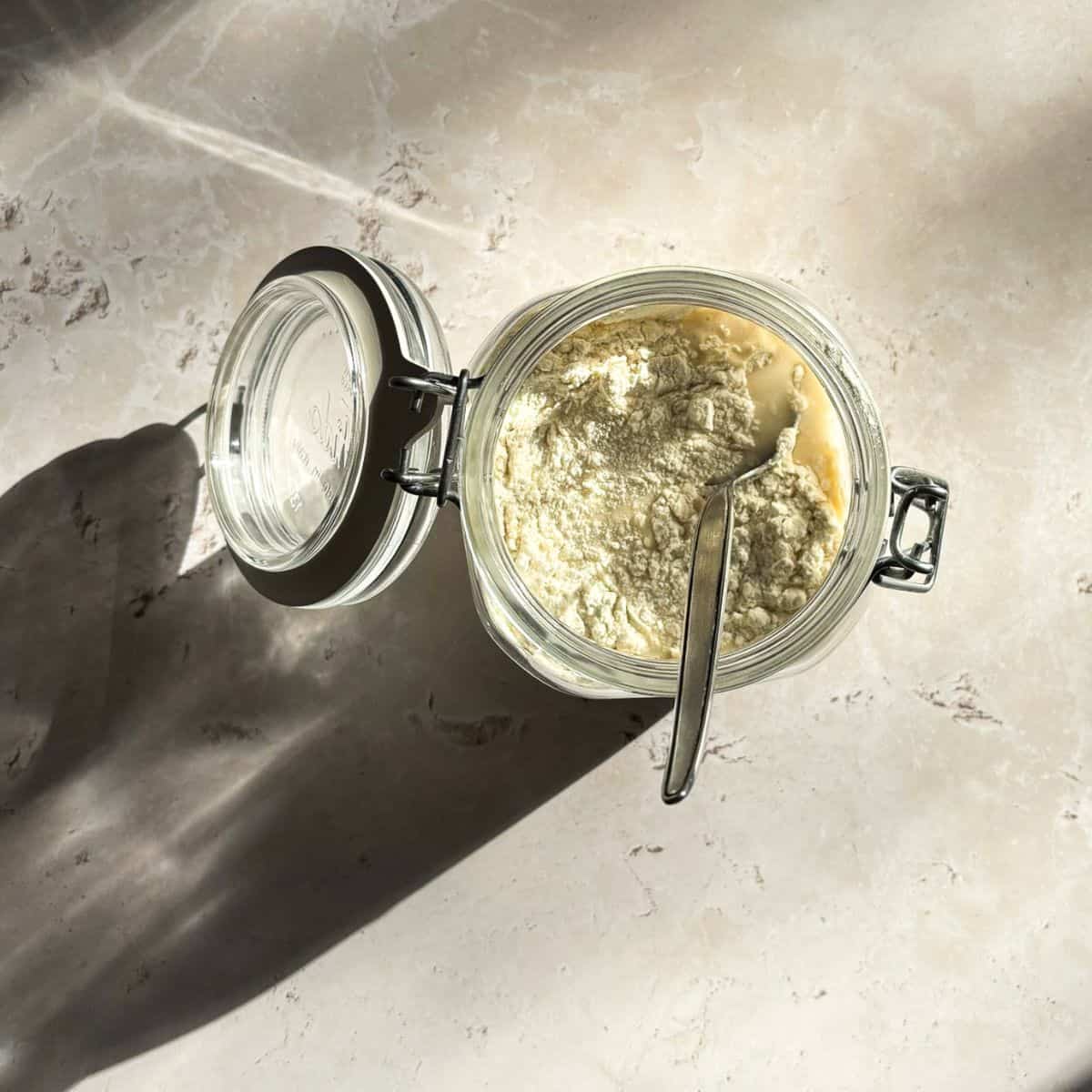
How to Dehydrate a Sourdough Starter

Learn how to dehydrate a sourdough starter with our step-by-step guide. We will show you what you need, how to dry your starter, and how to rehydrate when you’re ready to bake your favorite sourdough recipes.
Why should you dry your starter?
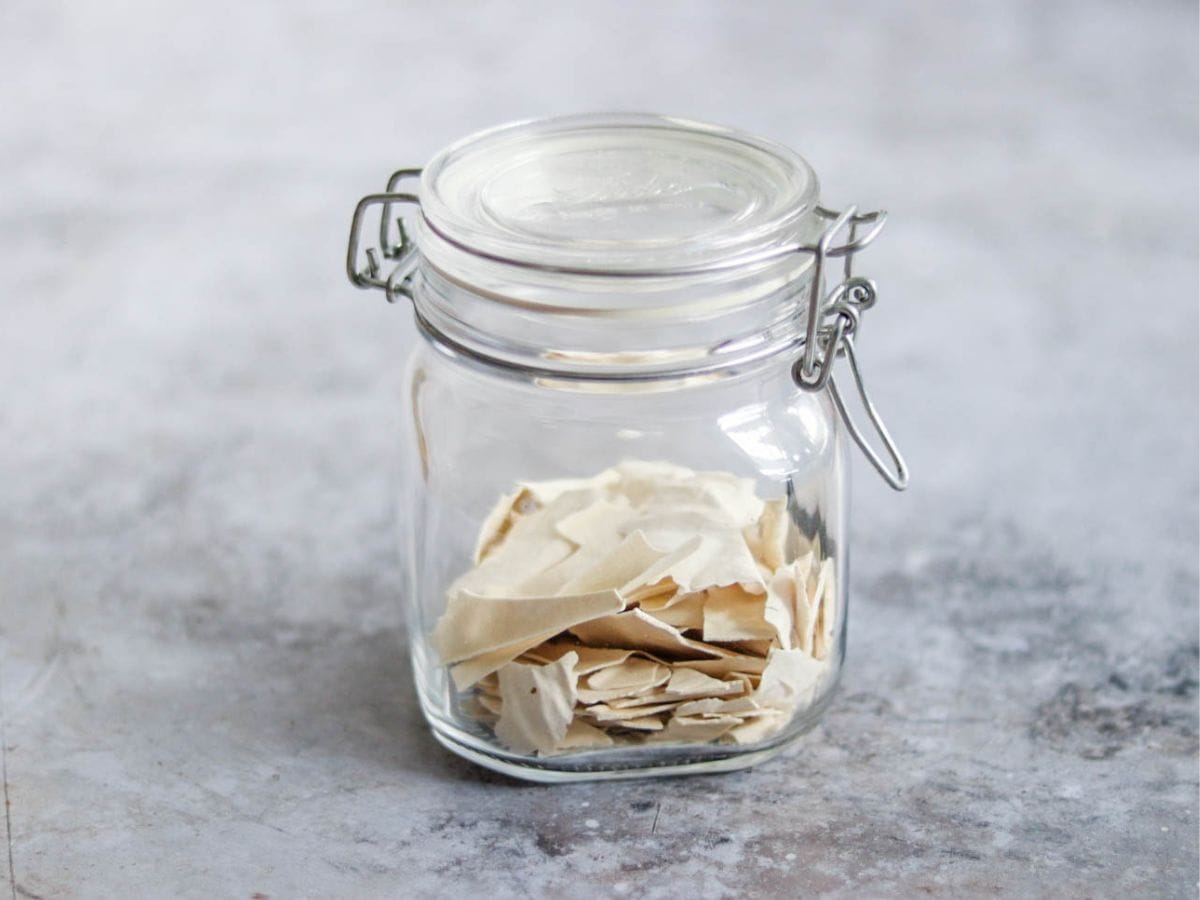
- It lasts for ages. If you store it in a cool and dark place, your dehydrated sourdough starter can last for more than a year. It is also perfect for when you’re on holiday and you want to put your starter on hold! You can store your starter in the refrigerator or freezer, but we prefer drying out the starter if we want to put it on hold for more than a few weeks.
- You can send it to friends. Once it’s known you bake sourdough bread and have an established starter, people want in! Pack it in plastic and send it to whoever wants to start their sourdough journey.
- Perfect to have on hand for when something goes wrong with your starter. We hate it when you forget to feed one of our starters and have to start from scratch. That’s why we like to dry the discard of our favorite starter so we can activate it when we need to.
Different methods
We always let our starter air dry when we want to dehydrate our starter. Drying your starter without an oven makes sure that none of the bacteria and yeast you need are destroyed. When you air-dry your starter, it is important that you place it in a well-ventilated room. You want fresh air circulating around your starter to make sure mold doesn’t have a chance, and the moisture evaporates quickly. We like to leave it on your counter until it is dry, but you could also place it on a table in an empty room as long as it has low humidity.
On the internet, there are a ton of tutorials for drying your starter in an oven, but that is not something we recommend. You can dry your starter in an oven on low heat, but it is a bit tricky and can easily ruin it, and you have to start over because even low heat removes some of the helpful bacteria.
You can also use a dehydrator, and while this works, it also uses heat to dry your starter, so for the oven method, we don’t recommend it. Whatever method you use, you want to let your starter dry until it is brittle and can easily be broken up into small pieces for storage.
What do I need to dry my starter
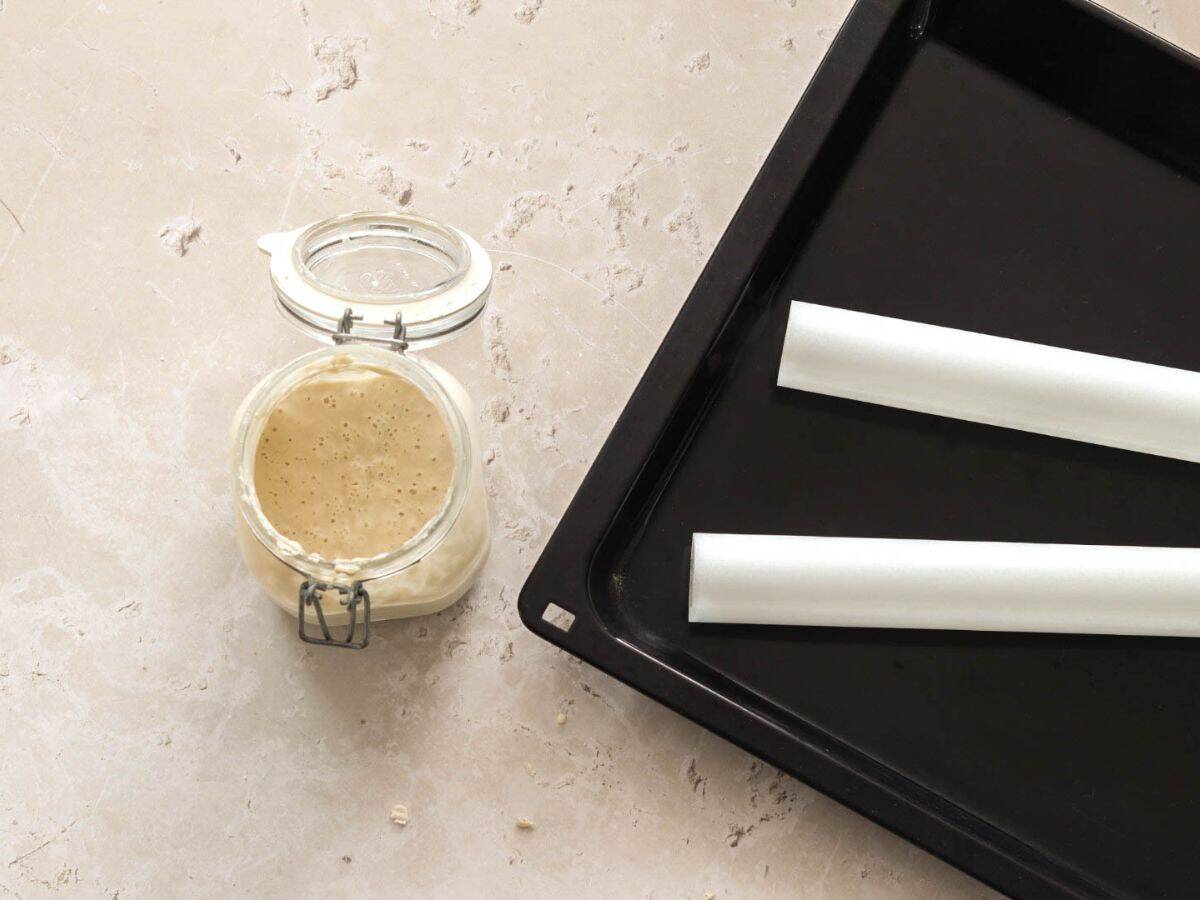
Sourdough starter: When you're drying your starter, you want to have a well-established sourdough starter. Older starters tend to be stronger and give more bacteria and yeasts. This is also why, preferably, you feed your starter a few hours before to get it active and bubbly. If you don’t have one yet, check out our guide on how to make a sourdough starter.
Parchment paper: To make it easier to pick up and crumble the dried sourdough starter, you want to spread it out on a piece of parchment paper. The second sheet is placed on top to prevent dust from sticking to your starter.
Baking tray: This is optional, but placing the parchment paper on a baking tray makes it easier to move around while still keeping it flat. You don’t have to use a baking tray; any hard, flat surface will work.
Glass jar with a lid: After it has completely dried, you want to keep moisture away from your dried starter. The best way to do this is in a glass container with a lid.
How to dry a sourdough starter without an oven
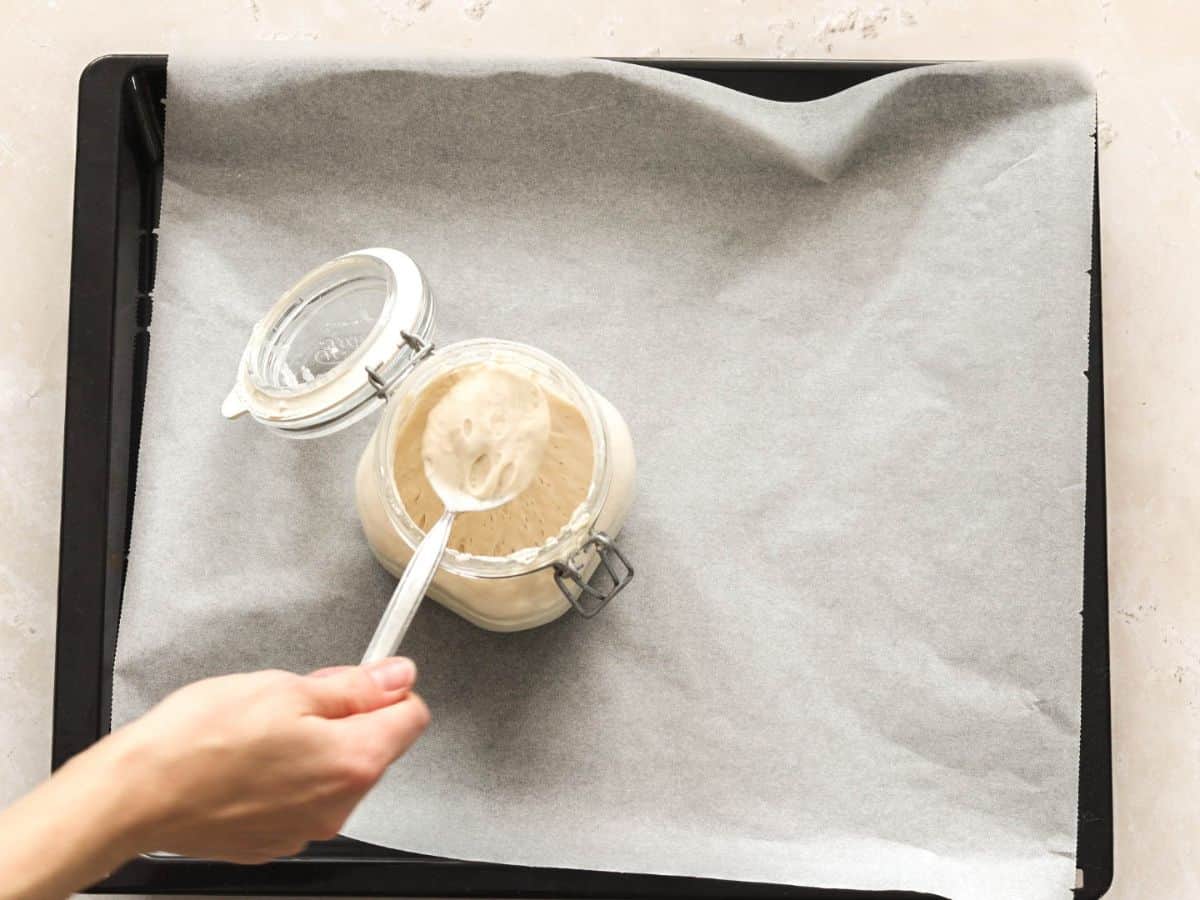
To dehydrate your starter, you need to place a piece of parchment paper on a tray. This makes it easier to remove the dried starter and break it up into small pieces.
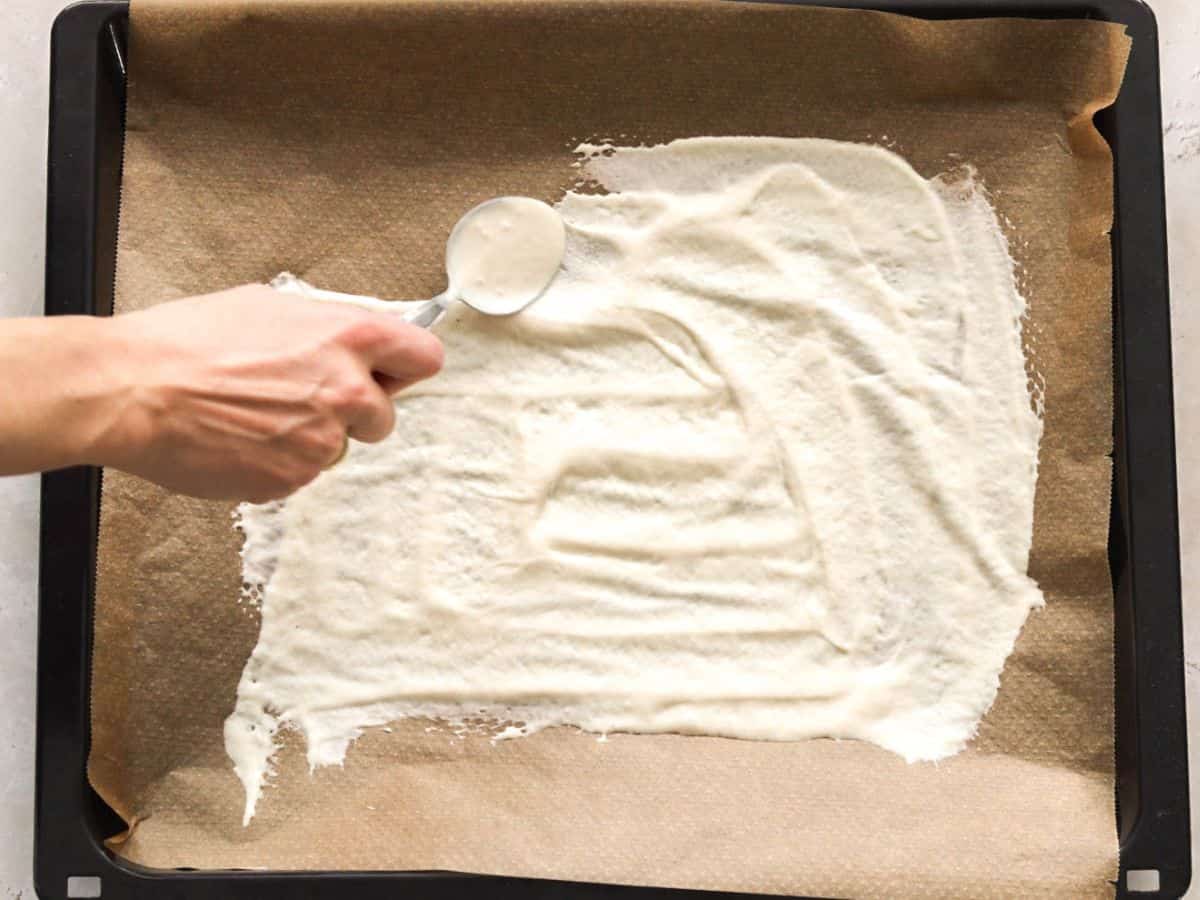
You want to spread out your starter in a thin layer. The thinner the layer is, the quicker it will dry. This is important because you don’t want any mold growing on your starter.
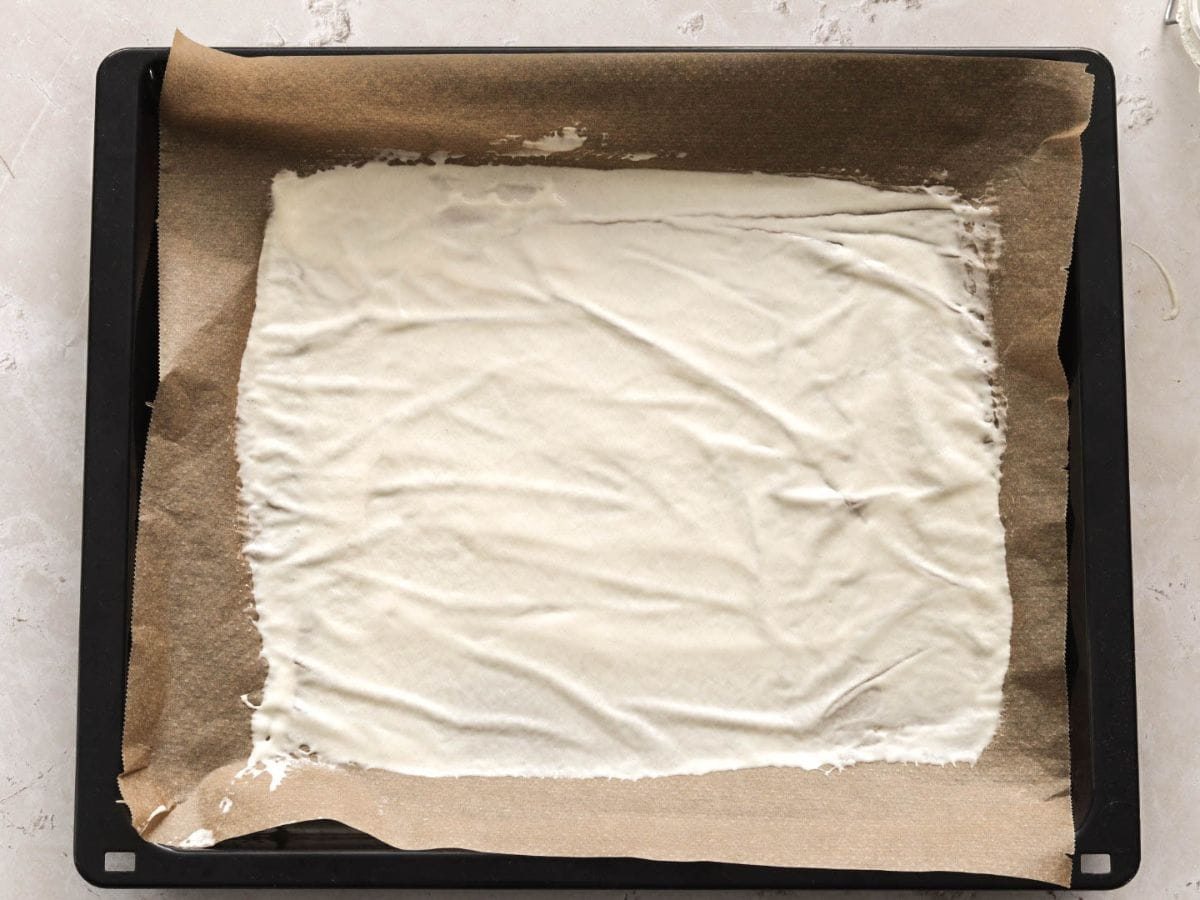
You know your starter is completely dry when there aren’t any darker spots left, and it feels hard/dry. A dried starter will also change color from grayish when wet to a pale yellow/off-white when completely dry.
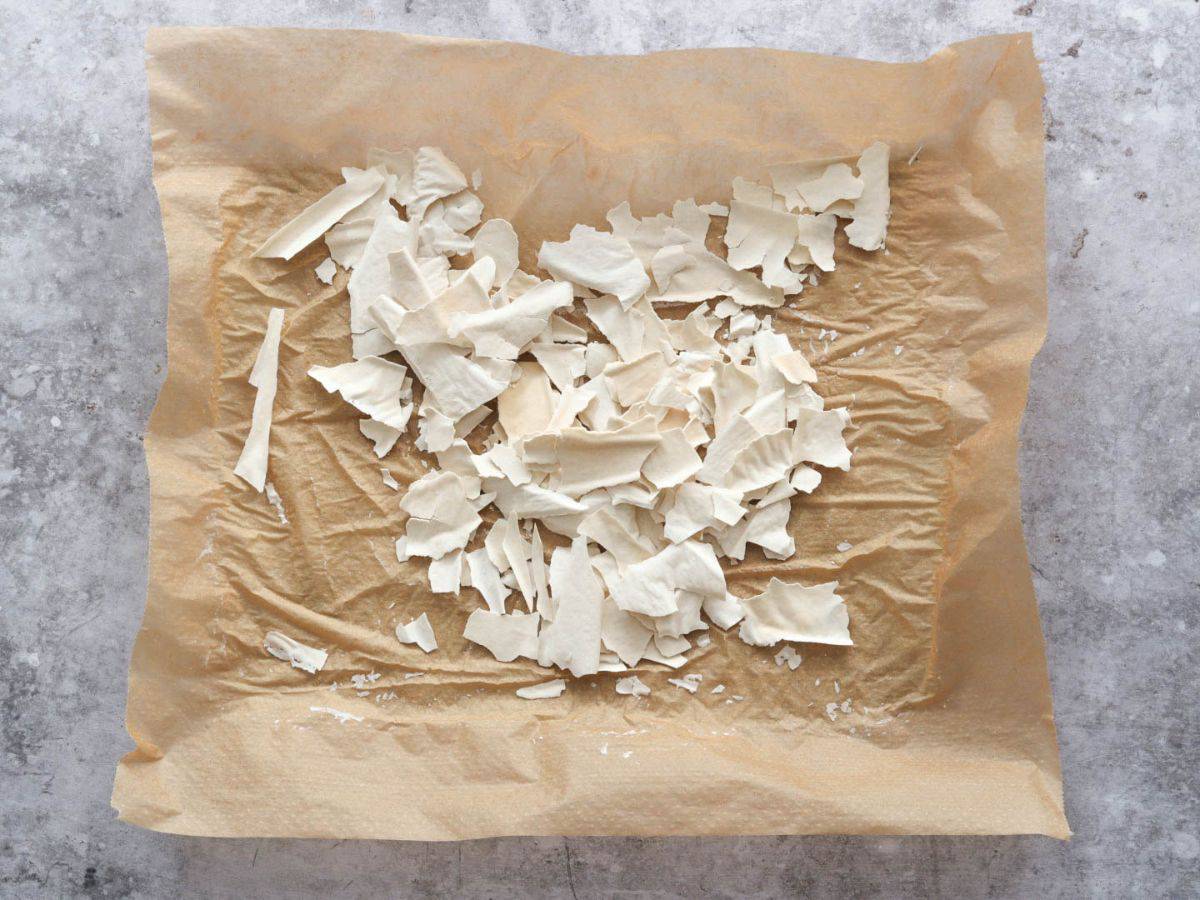
To store your dried starter, you need to crumble it up. Small pieces are easier to store and rehydrate. You can also turn it into a powder, but we like to break it into medium-sized pieces.
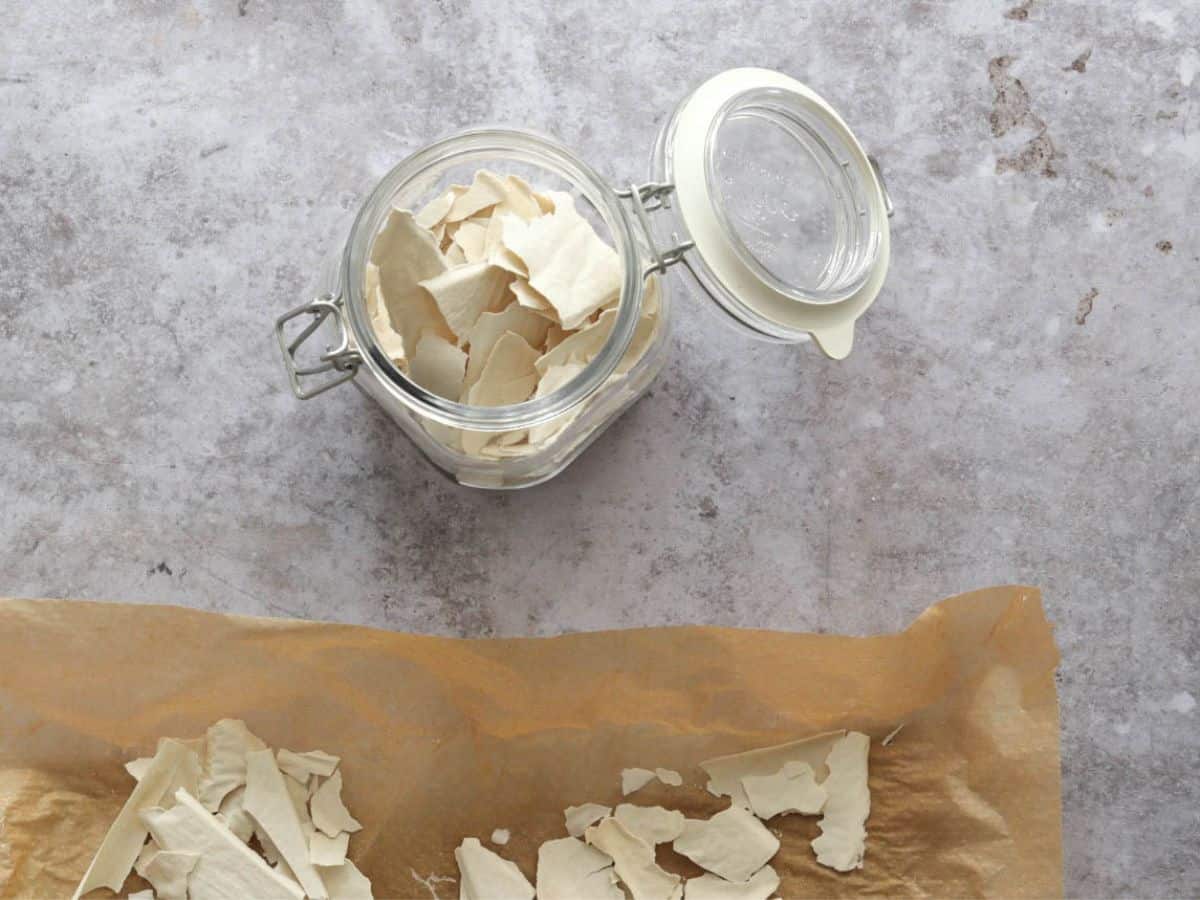
Transfer the starter to an airtight jar for storage and keep it in a dry place. You want to keep as much moisture out of your yeast as possible for a longer shelf life.
How to rehydrate your starter
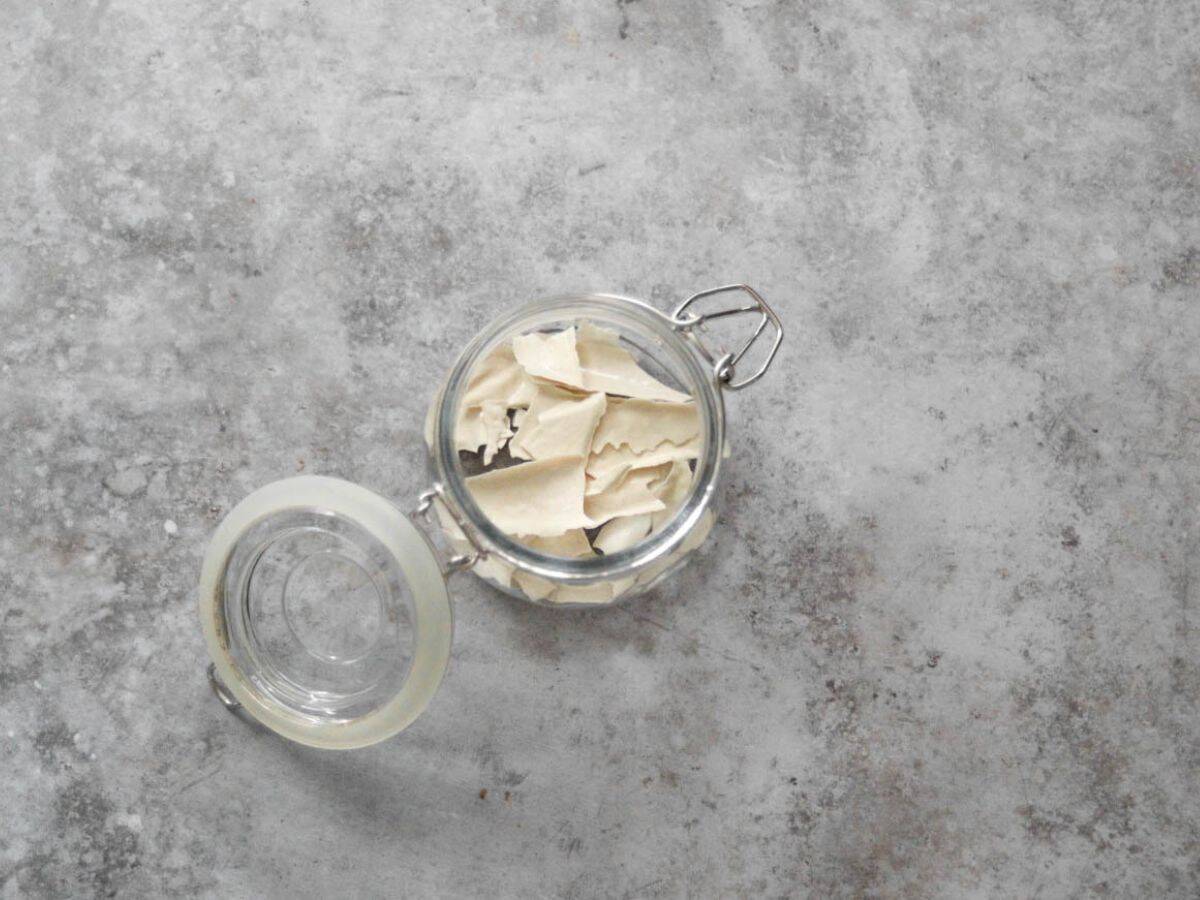
Now that you’ve mastered the art of dehydrating your sourdough starter, it is time to learn how to revive a sourdough starter. You don’t need to rehydrate the whole batch; start with one teaspoon, about 5-10 grams. Add the dried starter to a container and add enough water to activate the starter.
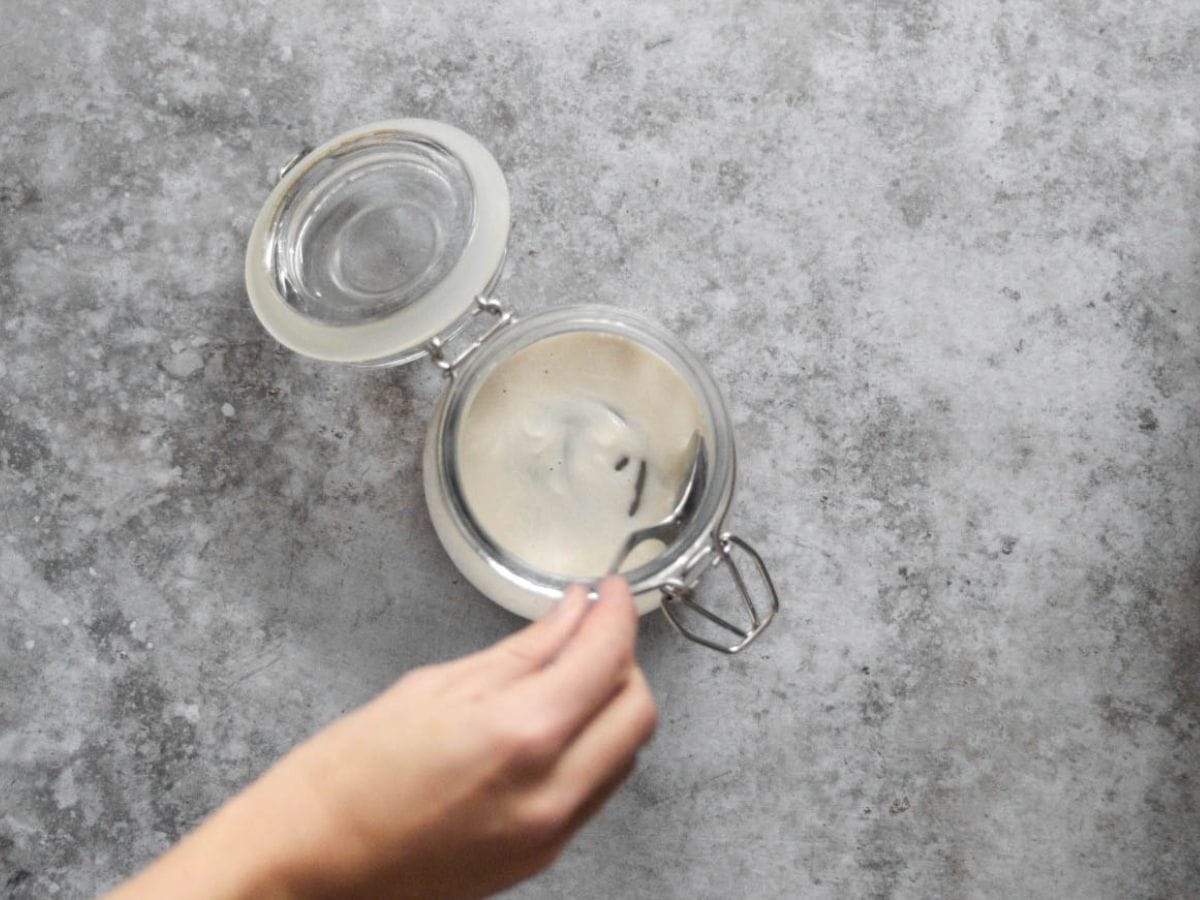
Set your container aside until the dried starter has absorbed most of the water and has softened. This can take a few minutes to up to an hour, depending on the size of the pieces. One of the reasons to pulverize your dried starter is that it is easier to measure the amount you need, and it takes less time to rehydrate.
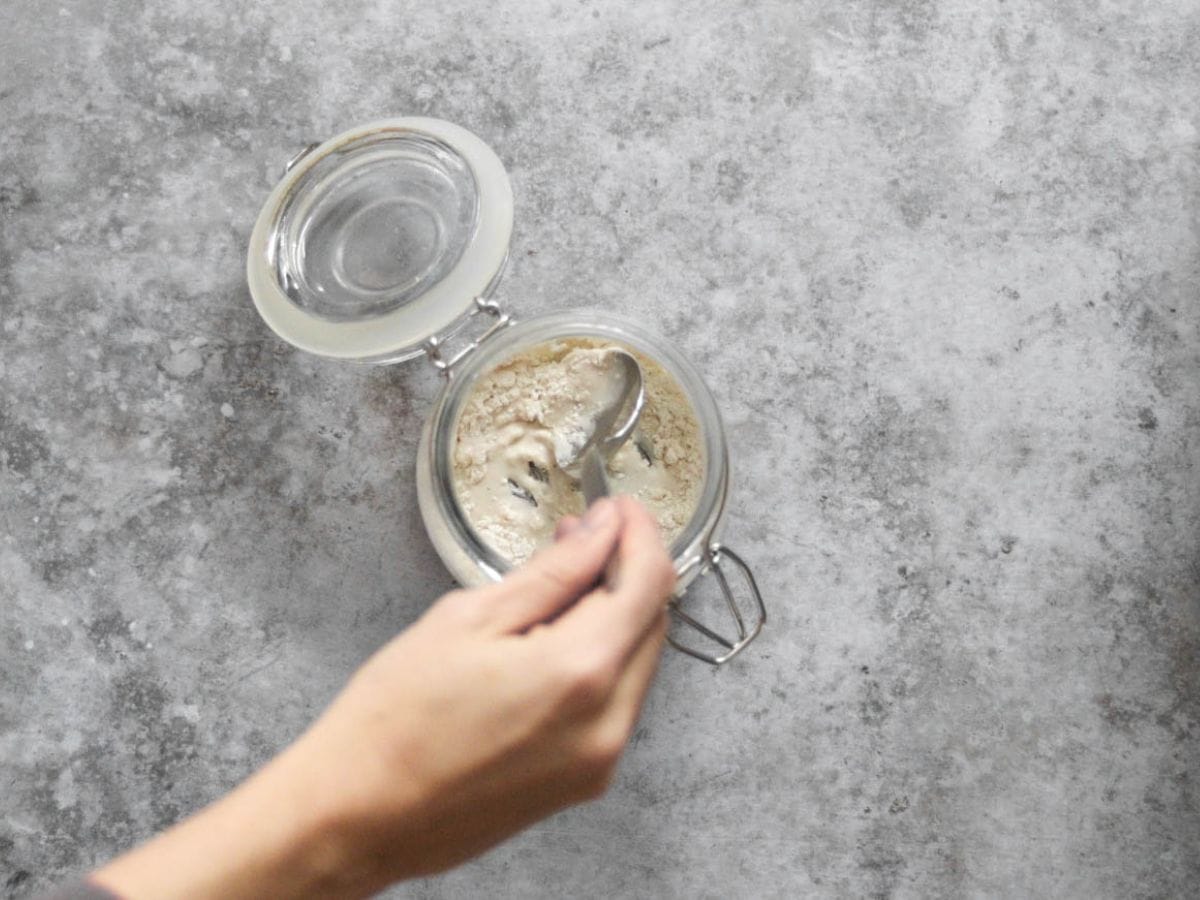
Once the starter is soft enough, you can add a little bit of flour. Add 20 grams all-purpose flour to your starter and once combined, let it sit for 12-24 hours to give your starter enough time to become active.
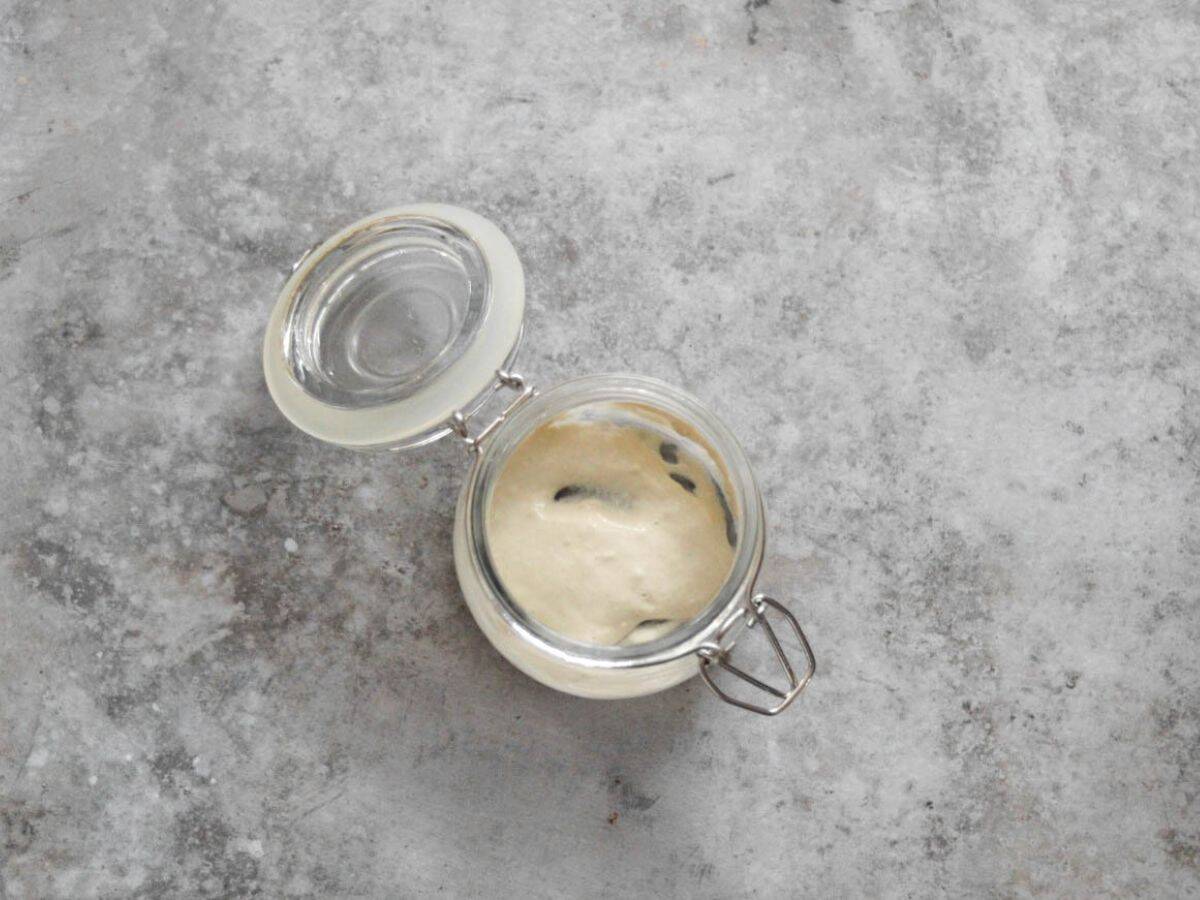
After a day or so, you should see some activity, but it can take a day or two for your starter to be truly active. Feed your starter with 1/4 cup of flour and 1/4 cup of water, and set it aside. That’s it! You continue to feed it as you usually would and store it on your countertop in the refrigerator.
Our tips for the best results
- Make sure to spread your sourdough discard in an even layer. This way, it will dry quicker and more evenly, preventing any problems.
- Use an active and established starter. The more active your starter is, the stronger it will be after rehydrating.
- Dry your starter in a well-ventilated place. This is important to make sure your starter dries completely, and that mold hasn’t got a chance to grow.
Frequently asked questions
Yes!! Dehydrating your sourdough starters is a great way to preserve starters you don’t use daily, like a chocolate sourdough starter or a whole wheat sourdough starter!
When there isn’t enough airflow, your starter can get moldy. This is why it is crucial to place your starter in a well-ventilated room while it dries.
If your starter stays wet, it can be that the layer is too thick or that there is too much humidity. Try starting over with a thinner layer and see if that helps. If you still have problems, feel free to contact us for help.
How to store a dehydrated sourdough starter
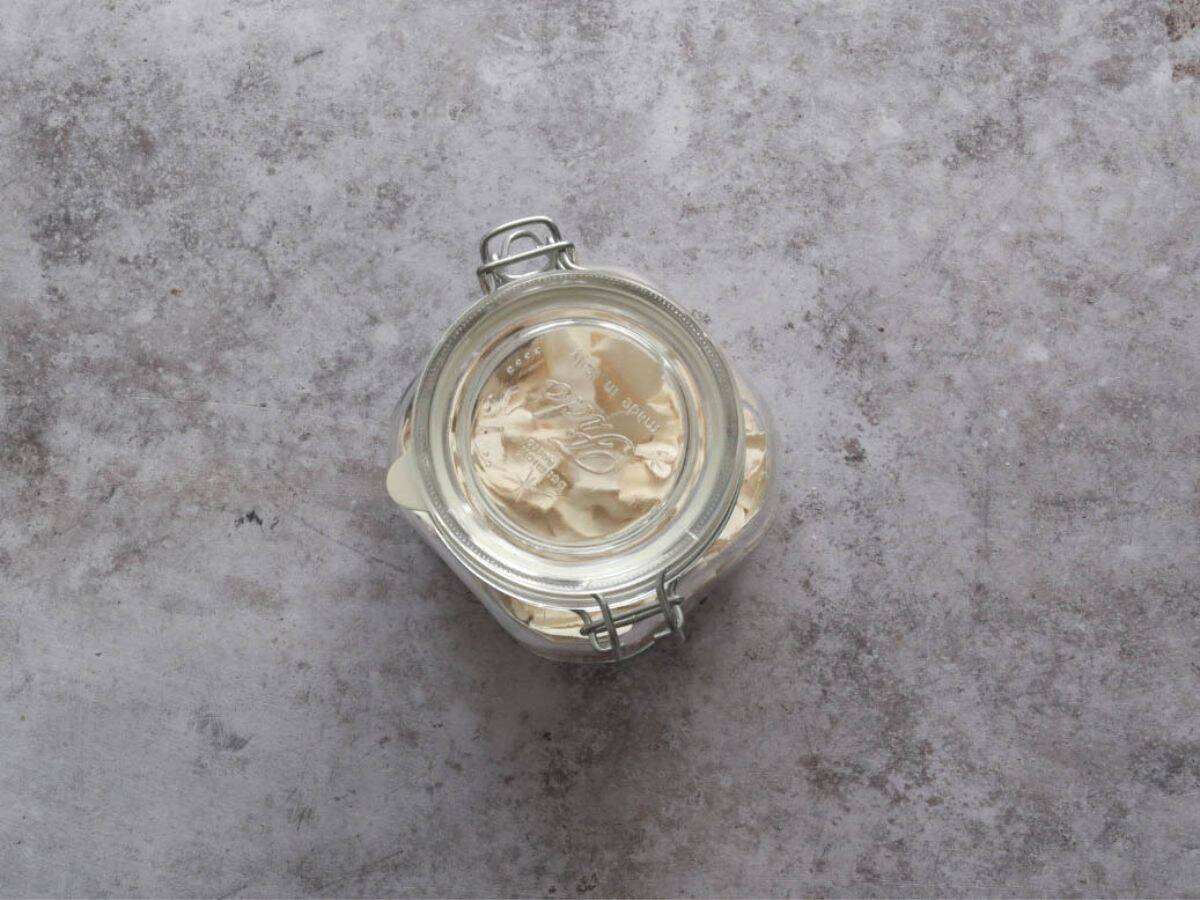
Dehydrated sourdough starter will keep for ages if stored right. This means you should add it to an airtight container to keep the moisture out and store it in a dry, cool, and dark place.
Our favorite sourdough starter recipes
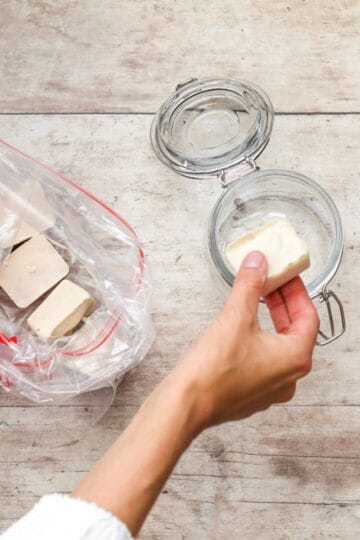



How To Dehydrate a Sourdough Starter

Equipment
- 2 pieces of parchment paper
- 1 airtight container with lid preferably glass
Instructions
How to dehydrate your sourdough starter
- Feed your starter and wait for it to become bubbly and active. This can take a few hours.
- Line your baking tray with one piece of parchment paper.
- Once your starter is ready, take out 1/4 cup and spread it out in an even layer on top of 1 piece of parchment paper.
- Place the other piece of parchment paper on top of your starter and set it aside in a well ventilated room to dry.
- Break your dried starter into small pieces and transfer it to an airtight container.
How to rehydrate your sourdough starter
- Add one tablespoon of your dried starter (about 10 grams) to a bowl and add 2-3 tablespoons of water. You might need more; your starter should be just underwater.
- Set it aside until the starter has absorbed most of the moisture and has softened. This can take a few hours so we like to do this step in the evening.
- Mix the starter until you have a smooth mixture.
- Add 1 tablespoon (20 grams) of flour and let it rest for a day to become active.
- The next day, you can feed your starter as normal with 1/4 cup of flour and 1/2 cup of water.